Blog
Patrick Stewart Taught Me How to Think About AI
Sir Patrick Stewart died this week at 86. I grew up on Captain Picard. Thirty-seven years later, one episode still shapes how I talk to CEOs about AI.
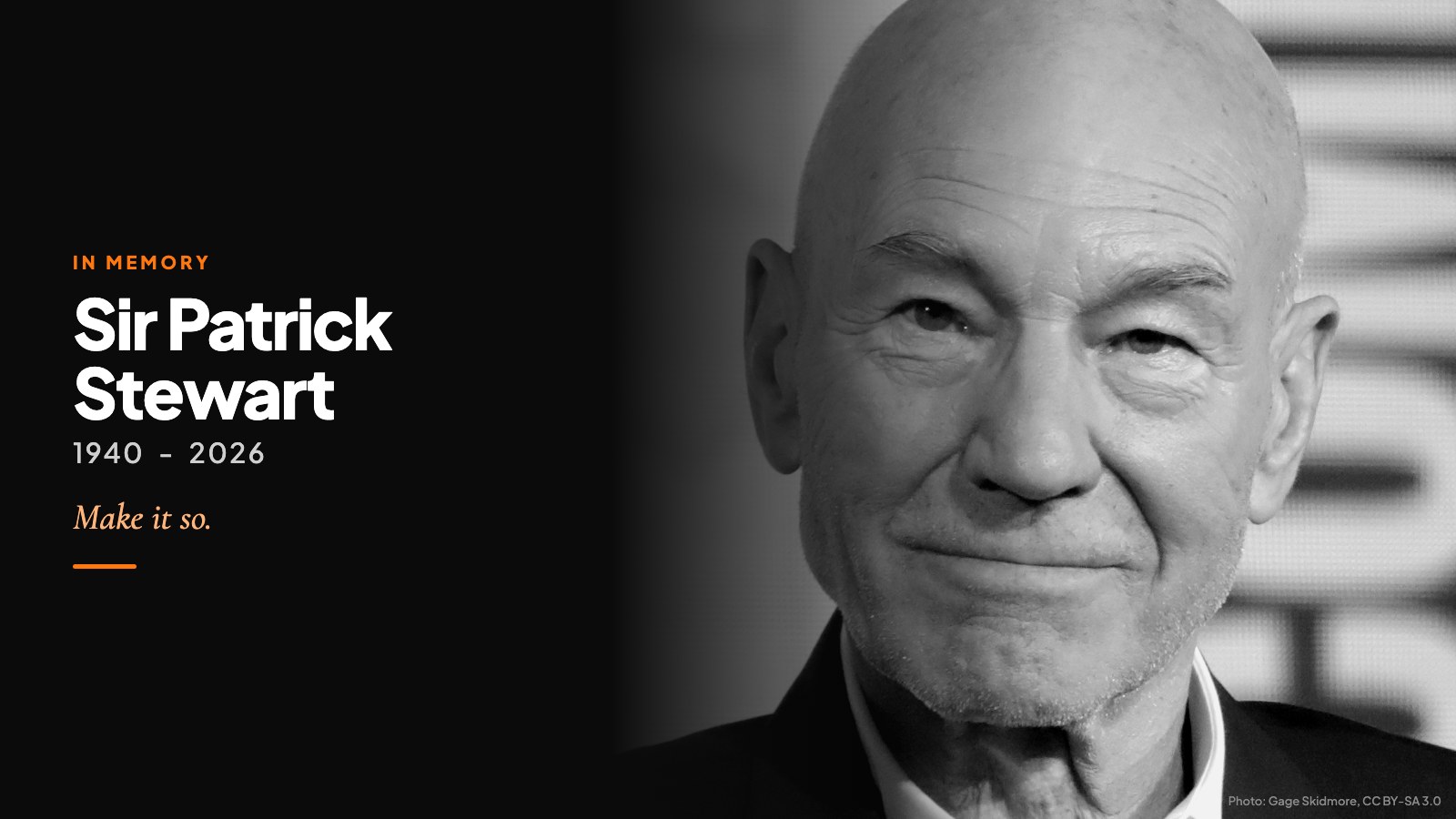
Sir Patrick Stewart died on Wednesday at his home. He was 86. His wife, Sunny Ozell, was with him.
I grew up on Star Trek: The Next Generation. Seven seasons, 1987 to 1994. For a kid who liked computers more than sports, Captain Jean-Luc Picard was the adult I wanted to become. Calm in the room. Curious about everyone. Never the loudest voice, always the last word.
I never saw him on stage. I came close.
In February 2014 I spent a weekend in Manhattan and saw two Broadway shows in one day. At the Cort Theatre, he and Ian McKellen were doing Waiting for Godot and No Man's Land in rotation, a few blocks from both theaters I sat in that day. I never bought the ticket.
I've thought about that weekend a lot this week. You assume there will be another run. Another tour. Another chance. Sometimes there isn't.
He was a stage actor first. More than 60 productions with the Royal Shakespeare Company. Eleven Broadway runs, from A Midsummer Night's Dream in 1971 to Waiting for Godot and No Man's Land with Ian McKellen in 2013 and 2014. Hollywood got him late. We got lucky.
The episode I keep coming back to
In February 1989, season two aired an episode called "The Measure of a Man."
A Starfleet scientist wants to take Data apart to learn how to build more of him. Data says no. Starfleet rules that Data is property, so his "no" doesn't count. Picard demands a hearing.
Picard doesn't win by proving Data is conscious. Nobody in the room can prove that. He wins by turning the question around: if we build a whole race of minds like Data and treat them as equipment, what does that make us?
I was a kid when I watched it. I didn't know I'd spend the next three decades building software, or that I'd end up in boardrooms helping companies decide what AI should and shouldn't do.
That episode was my first AI ethics class. It's still the best one I've had.
What Picard got right about AI, before AI was real
I've been rewatching his scenes this week. Three things stand out.
He asked the question nobody wanted to ask. Everyone in that hearing wanted to talk about what Data could do. Picard asked what we owe the thing we built. Most AI conversations I'm in today are stuck on capability. The better boards are asking about responsibility: who owns the outcome when the model gets it wrong?
He held the line on language. Starfleet called Data property. Picard refused the word. Words shape decisions. It's the same reason I push back when a vendor calls their software an "AI employee." Picard knew labels were never neutral.
He listened first, then decided. Watch any briefing-room scene. He hears from Riker, Data, Geordi, Troi, Crusher, Worf, even when he disagrees. Then he says "make it so." That's the whole job of leading through AI. Get the experts in the room, let them argue, then own the call.
The optimism was the point
Star Trek imagined a future where technology made people better. Picard treated Data like a junior officer with a lot to learn and a lot to offer, and he mentored him for seven seasons.
Every week I hear from leaders who are scared of AI or dazzled by it. Picard modeled a third option: be curious, be careful, and keep your humanity at the center of every decision.
He made it look easy. It isn't. It's still the right goal.
Close
Thank you, Sir Patrick. For Picard, for Shakespeare, for the Christmas Carols, and for teaching a kid in front of a TV that the measure of a person is how they treat the ones with less power in the room.
Engage.
What's your favorite Picard moment?
Cover photo: Gage Skidmore, CC BY-SA 3.0, via Wikimedia Commons. Cropped and converted to black and white.
