Blog
The Best Coffee Roaster In Town Is Not On Google. Evan Dobas Of CivicLift Is Fixing That.
Your town has the culture. It does not have the plumbing. AI changed which traffic matters, and most communities have not adjusted. A conversation with Evan Dobas, founder of CivicLift, on the infrastructure problem nobody is talking about.
Evan Dobas told me a story this week that I cannot stop thinking about.
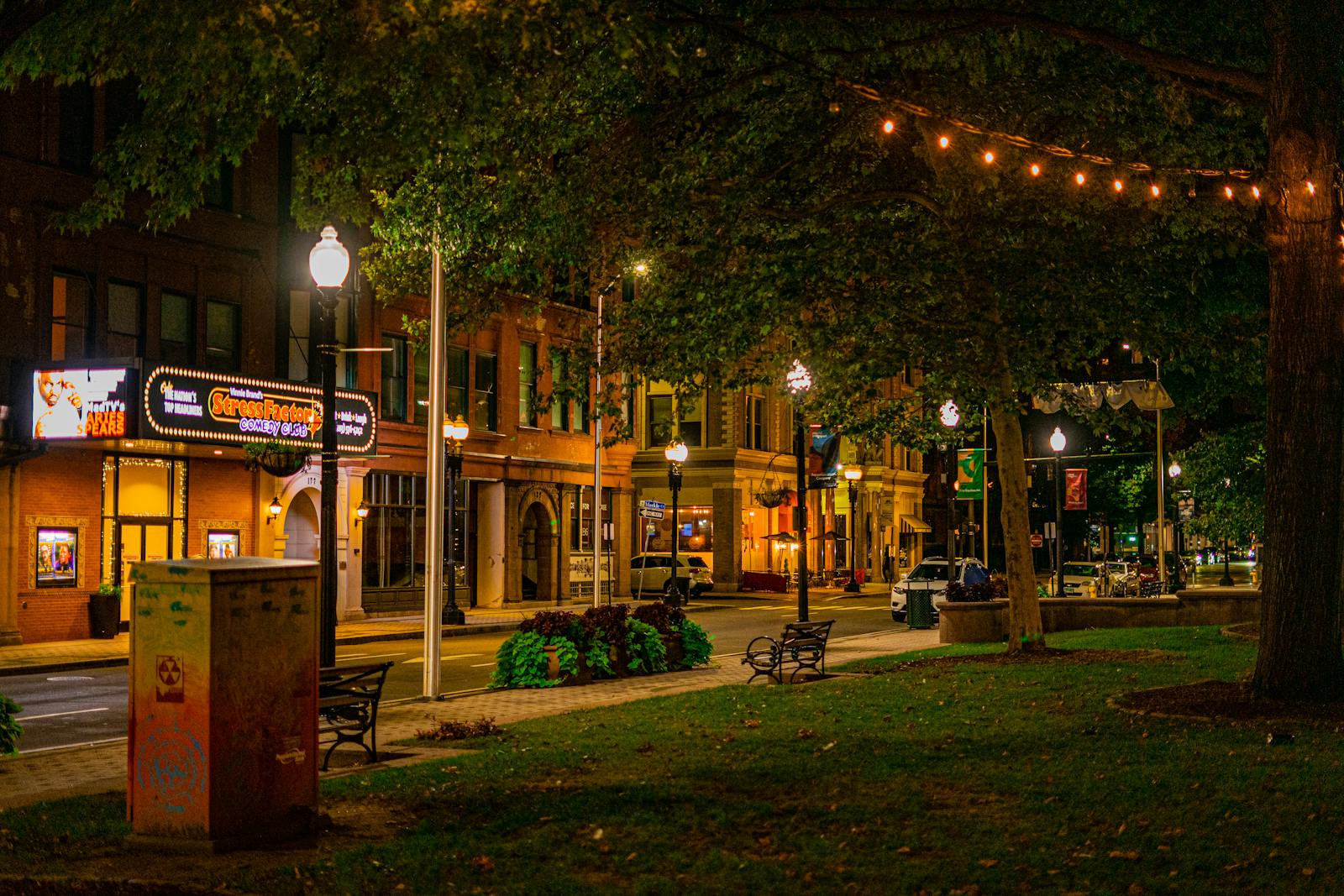
He is standing at the main intersection in Torrington, Connecticut. He pulls out his phone and Googles "coffee near me." Two blocks away, an entrepreneur has just come back from three months in Colombia tasting and sniffing beans for the roastery he is about to open. Every detail of the shop is his own, from the furniture to what it smells like when you walk in the door. Google's answer to "coffee near me" is Dunkin' Donuts. Starbucks.
Evan said he is personally offended by that. I am with him.
That five-second moment is the whole thesis of his company.
The guest, and why the conversation mattered
Evan is the founder of CivicLift. He spent ten years running a small web design agency in Torrington before he found the project he wanted to spend the next decade on. CivicLift is what he calls "the MLS for local events, places, and culture." Towns, tourism boards, art organizations, and Main Street programs submit their content once. CivicLift distributes it everywhere automatically.
The numbers tell you the model works. Roughly 4,500 events a month across more than 40 initiatives in Connecticut. About 1.5 million views in the network. He has been bootstrapped the whole time.
I wanted Evan on the podcast because almost every enterprise AI conversation I am in this year has the same hidden problem underneath it, and almost nobody at the table names it cleanly. He is the rare founder who has named it.
Your town is not dead. The connective tissue is.
I opened the episode with a question I have been asking small-city leaders for months. Why does your town feel dead even when it isn't?
Evan's answer was sharper than mine. The activity is there. The culture is alive. The events are happening. The entrepreneurs are pouring real money into real shops. Nobody knows about any of it because every initiative in town picked a different platform fifteen years ago and never coordinated again.
The Main Street program has a Facebook page. The arts council has a newsletter. The town runs its own events calendar. Tourism has a third site. Every one of those teams is understaffed, underfunded, and full of people who actually love their community, which is exactly why they took the job. None of them have the bandwidth to keep the others in the loop.
The resident, meanwhile, is on a scavenger hunt to answer the simplest question a community can be asked. What is there to do this weekend with my family.
If you have ever sat through a board meeting where a town administrator wonders out loud why the new events site is not getting traffic, this is the answer. The site is not the problem. The plumbing under it is.
AI changed which traffic matters
Here is the part that most community leaders have not internalized yet, and the part that should land hardest for anyone running a website in 2026.
When a resident searches for "what is there to do this weekend with my family," the AI summary at the top of the results page is now answering the question. Most of the time, the click never happens. The visitor never sees your website. Your analytics show a flat line. The events you spent the budget promoting did not actually reach anyone, and you cannot tell.
Evan said the quiet part out loud. If your information is not digestible by these AIs, you are not only losing the click. You are losing the answer.
That is a profound reframe for civic communications. For two decades, the goal was "drive traffic to our site." For the next decade, the goal has to be "make sure the answer is right." Evan put it cleanly when he said, "We don't care where the information is found. We just care that the information is found."
Same shape, completely different infrastructure underneath. That is the work CivicLift is doing.
The MLS analogy is correct, and the parallel to enterprise is exact
The realtors solved this problem decades ago. They built the MLS, agreed to share the data, and got out of each other's way on the distribution. Buying or selling a house without it is unthinkable today.
Communities are still doing it without the MLS. Every initiative builds its own listing. Every initiative competes for the same eyeballs. Every initiative writes its own newsletter. The data is fragmented on both sides, the senders and the receivers, and the only people who benefit are the platforms that aggregate them after the fact and pull traffic out of the community.
I told Evan on the call that the same model is what I see at the enterprise level. Companies are not dying for content or for people. They are dying for the plumbing that connects the content and the people they already have. CivicLift is that plumbing at the community level. The enterprise version of that conversation is exactly what I do with boards every week.
If you are an executive listening, you are not as far from this as you think.
What Evan built that small teams should copy
The two specific AI moves Evan walked me through are worth lifting out, because they are the kind of thing a two-person team can ship next month.
First, he built a tool he calls "the scout." When he is entering a new region or town, the scout goes and finds the event sources, the APIs worth integrating with, the popular cultural websites, the realtors writing on LinkedIn about the area. It comes back with a personality profile of the community. What is important there. Why people move there. The trends nobody has put into words yet. He uses it to bootstrap CivicLift's coverage of a new town in days instead of months.
Second, he replaced his proposal and contract drafting almost entirely. His sales calls run with a Fireflies transcript. The transcript and his notes feed into a platform he built that knows everything about CivicLift and how he likes to sell it. The platform writes the proposal. It writes the contract. It interviews him on what to keep in and what to leave out before it finalizes.
He works with Claude Code, ChatGPT, and Gemini, and he uses all three to bounce ideas off each other. Same playbook I run in my own engagements, just pointed at a different problem.
What to do this week
If you run a community initiative, a tourism board, an arts organization, or any seat where you are responsible for what residents and visitors see online, do these before the end of the week.
- Audit how AI summaries answer your top three questions. Try "what is there to do this weekend in [your town]" and two others. Read what the AI returns. Is the answer accurate. Is it your culture or somebody else's content.
- Stop counting clicks on your events site. Start counting whether the answer is right. The metric changed. Your tracking has not.
- List every other initiative in your community with a published events stream. Send each of them one email asking what it would take to share the source data. The MLS started with that conversation.
- Pick one tool job and ship a small AI scout for it. A local-business directory pull. A weekly cultural-trends summary. Something a two-hour Claude session can build.
- If you are enterprise, not civic, run the same audit on your own customer-facing content. Your AI-traffic story is the same story, just with a different audience.
Close
The line from this episode I keep coming back to is Evan's. The communities that win in the AI era will not be the ones with the biggest budgets. They will be the ones that finally get the infrastructure right. That should be deeply hopeful for any town that has felt left behind for fifteen years of platform churn.
If you work in civic life, economic development, tourism, arts, or any seat where you are responsible for what your community looks like online, this is the conversation you need to be having right now.
Listen to the full episode of AI with Bry with Evan Dobas, founder of CivicLift.